Boosting strength means building talent, and college is the key
As we at Lumina Foundation prepared to release this, the fourth edition of our signature report, A Stronger Nation through Higher Education, I found myself pondering a fundamental question, a query embedded in the title itself: Just what do we mean by “stronger?” How does one properly define a nation’s strength, and what’s the best way to increase it?
These are important questions — ones that we’ve addressed intuitively, I think, but perhaps not explicitly. So let’s be clear: At its core, the strength of this nation — or any nation — is its people, the sum total of talents, skills and abilities inherent in its citizenry. Only with sufficient talent, and the right kinds of talent, can a nation truly succeed.
Talent development, then, must be America’s prime objective, and it’s not a task we can tackle by conducting business as usual. We can’t expect our citizens to meet the demands of the 21st century economy and society without a 21st century education. Americans need an education that imparts rigorous, relevant learning — an education that provides the tools that are necessary to thrive in the face of rapid, inevitable change. In short, our citizens need high-quality, credentialed, college-level learning — and they need it in greater numbers than ever before.
Lumina’s embrace of Goal 2025 succinctly expresses this need: By 2025, we want 60 percent of Americans to hold high-quality degrees, certificates or other postsecondary credentials. We’ve worked toward this goal for several years now, and each year brings more evidence of its validity and urgency.
For example, the most recent figures from the Organisation for Economic Co-operation and Development show that, among young adults (ages 25-34), the U.S. college-attainment rate is just 42 percent. This ranks us 13th among developed nations — not an enviable position in today’s increasingly competitive global economy.
But we needn’t look beyond our own borders to find compelling arguments for boosting postsecondary attainment. For instance, experts point out that four out of every five American jobs lost during the recent recession required a high school education or less. Clearly, those low-skill jobs are gone for good, and the future belongs to those with college-level learning.
In fact, this report’s main essay fairly bristles with facts and statistics that demonstrate the growing value of increased college attainment. It offers evidence of employers’ growing need for highly skilled workers. It points out the increasing worth of high-value postsecondary certificates. It cites the experts’ projection that, by 2020, two-thirds of all jobs will require postsecondary credentials.
What’s more, the essay makes clear that the benefits of higher education go beyond economics. It shows that increased college attainment not only generates economic prosperity, but also helps us address social inequities and improve society. There are huge gaps in educational achievement in this country linked to race, income and class — persistent inequities that have dogged us for decades. And there are other gaps as well, attainment challenges associated with first-generation status, with military service, with age and employment and family responsibilities. We can’t allow these attainment gaps to continue. The stakes are just too high — not merely for the people who are directly affected, but for all of us as Americans.
For us to develop true strength as a nation, we have to do much better. We must provide high-quality, college-level learning to millions more Americans; in other words, we must work together to reach Goal 2025.
Lumina is fully committed to that task. We have pledged all of our resources toward it and, as reflected in our recently released Strategic Plan, we have organized all of our work around it. The plan calls for us to pursue several strands of work supporting two basic aims: 1.) mobilizing others at the local, state and national levels to reach the 60 percent goal; and 2.) designing and helping to build the student-centered, learning-based system necessary to produce that result.
Of course, the key to executing this plan — and to the achievement of Goal 2025 — is a close and consistent focus on the data related to college attainment. And that’s what Stronger Nation is all about: assembling and providing the data we all need to drive our decisions and actions.
The data offered here can be a powerful tool that can help you understand and address the college attainment challenges in your state, county or metropolitan area. It can help you identify the student populations facing the toughest road to success. It can pinpoint geographic areas of opportunity and suggest possible partnerships or coalitions that can make a real difference.
We urge you to use this report as you join the many organizations and individuals now embracing the challenge of Goal 2025. Truly, there is strength in numbers.
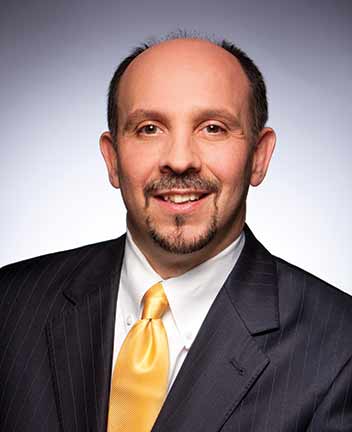
Jamie P. Merisotis
President and CEO